
Summary: Broomer Bowl, No room at the Inn, Fortescue River to the Rescue, Roadhouses and Road Trains, do you want to move here?,
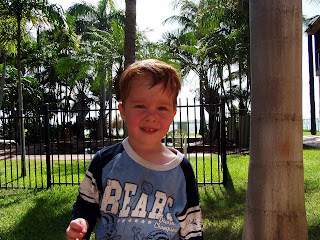

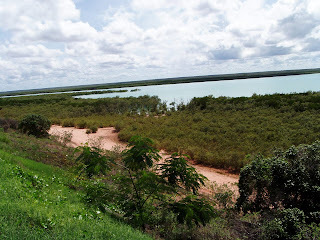
 Things in Broome finished quite well. We had a very good dinner at a local brewpub down the street – really good beer there (the name was something like “Matsu”). Alex and I then caught some live music in the hotel lounge – it was a cool, laid back scene. Alex was dancing and bopping around to the music, so we may need to find some more like that. We were at a nice resort as the photos may indicate. Broome is a big tourist destination when it is not the heat of the summer – kind of like South Beach Miami or New Orleans. I did not mention it in my blog posting, but it was 90-some degrees at night, humid as can be… and the AC did not work. Alex slept fine – he gets annoyed with the fan. Reception was closed so I called the front desk when they opened in the morning. Frankly, I was in fear that I had simply not noticed some giant “on” button or something obvious, but I was relieved to find that it was in fact broken. The Mangrove Hotel staff, which was professional all along, was immensely apologetic about that and the fact that to use the internet I had had to sit outside, so they refunded the internet fees and lowered my room rate. If I am back in Broome (and I would like to be), I would call them first. We watched the kickoff of the Super Bowl, but I quickly realized that a) I was at a resort in Australia so I had other things to do and nobody to enjoy the game or the commercials with, and b) a team I did not particularly like was playing a team that I particularly did not like. Fact is, tea and vegemite just don’t go with “American” Football. So after the first drive, we went to the pool, came back in around the end of the half, and left the hotel before the halftime was over. Australia’s FoxTel played the US commentary then had their guys do commentary during injury timeouts. They also showed some of the US commercials (or at least said they were going to – I was in the pool within a couple minutes). Note: sounds like it was a heck of a game and I am glad the Giants won.
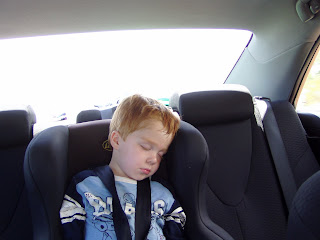
The drive south was flat and rather dull, to be blunt. However, by the time we got to Port Hedland (500km or so), we were clearly out of jungle and into the desert. Our goal was to make it to make it to Karratha and we did with an hour and a half of sunlight to spare. Karratha looked like a nice town and we were going to do some grocery shopping once we got a room… but there were no rooms. Like many of these remote towns, Karratha has a booming economy. Unfortunately, even with two Best Westerns, they do not have enough hotels yet. Some people who have moved there for work stay in hotels long term. Whatever the reason, the woman at the Karratha International was extremely helpful to a person who could not be a customer, called around, and discovered that there were no hotels rooms in Karratha or nearby towns like Dampier. The closest she could find was some roadhouse 110 km down the road. Daylight was going away soon, so we got on our way and made it to the Fortescue River Roadhouse before sunset.
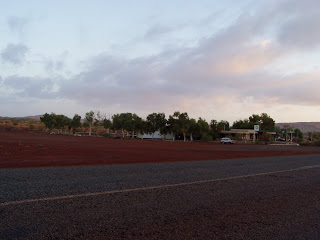
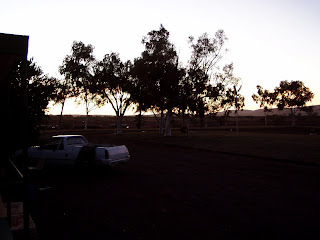
I must admit, I was a little nervous driving until nearly dusk to a roadhouse set in a place that looked like the location of the next Mad Max film. This is the only dot on the map for 250km or so. Turns out, it was one of the best nights of the trip. The room was fairly Spartan, but it was available (big deal at this point), it was clean, the AC worked (!), and there were no stray insect noises. So far so good. Quick aside: most people’s experience with the word Roadhouse involves a song by the Doors or a movie with Patrick Swayze. A roadhouse is a gas station, mini-mart, pub, motel, and camper (“caravan”) site – typically located a long way (100 km+) from a town (“town” defined as 50 people and sometimes even more). We had a good meal although the kitchen was about to close and a fantastic conversation with Barry (who owns the Fortescue Roadhouse and ambulance service) and Peter (a frequent patron). Great guys, salt of the earth, and well informed on world events, we had the kind of long, wide-ranging discussion you would hope to have on a trip like this. Peter had been in this part of the country for a long time, and Barry started this business back in 1976. There were a couple other younger patrons who joined us at times – looked like they were doing work nearby, but very friendly and good-natured. I learned several things, like a “blue” is a fight (making “Roadhouse Blues” have a different meaning). We exchanged beer coolers (a.k.a. “stubby holders” a.k.a. “coozies”), so you can find a couple University of South Carolina coozies if you happen upon this pub. As we chatted away and sampled the Western Australian Emu beer, Alex ran around like a mad man, spending the energy he had not already used in the Broome pool, 10 hours earlier. Net net, it was a very memorable night and guys like Peter and Barry are the reason that everyone loves Australians: bright, informed, engaging. Good times.
Now that I have defined a Roadhouse, let me get to Road trains. Road Trains are tractor-trailers in the American sense, except that they are tractor-trailer-trailer-trailers. They are the same trucks we see at home, but look really scary with those roo-bars in front (not trying to overdo the Mad Max references, but that is what they remind me of). Second, they are 50 meters. Thinking of the Super Bowl, the back of the truck could be at midfield and the front bumper is in the middle of the endzone. Simply, you don’t pass a Road Train without good visibility ahead (and there is lots of visibility most of the time). There are also a lot of oversized loads carrying homes.
Cool thing about these roads – even though there are not a lot of actual stops with gasoline or coca cola, there are tons of parking areas and rest areas for off-loading your trash and picnicking.
Yet another aside: Australia’s economy is booming. They just can’t get enough people. Peter and Barry were saying that companies in Karratha were paying $100,000 plus helping to pay your mortgage for manual labor. Steve (the Gippslander) at the Roadhouse in Pine Creek said the same thing (ok, $90,000+ housing) for above ground manual labor in Mt Isa (above-ground because much of the Isa’s business is mining, which pays more underground). Anyone who has seen my Do-It-Yourself skill knows I am not qualified, but it is amazing how much of a premium these guys are getting. When I got a radio signal, I listened to a program on ABC News Radio (Aussie ABC, in case anyone is confused at how far the signal carried) with the South Australia Minister of Education and Development (which apparently includes Immigration). They have an ad campaign in Britain that sounds like it is hilarious. People sitting in traffic, staring through the grey drizzle at images of sunny Australia with messages like “Manchester is no fun - maybe you would like to earn a lot more and live where the sun shines”. She was saying that 200,000 people emigrate from the UK every year (oh, and she was born in the UK). They have a goal to get 5,000 Brits a year. The whole country wants people (and I think there is room for them). I’m sold.
Next: getting to Monkey Mia


 Things in Broome finished quite well. We had a very good dinner at a local brewpub down the street – really good beer there (the name was something like “Matsu”). Alex and I then caught some live music in the hotel lounge – it was a cool, laid back scene. Alex was dancing and bopping around to the music, so we may need to find some more like that. We were at a nice resort as the photos may indicate. Broome is a big tourist destination when it is not the heat of the summer – kind of like South Beach Miami or New Orleans. I did not mention it in my blog posting, but it was 90-some degrees at night, humid as can be… and the AC did not work. Alex slept fine – he gets annoyed with the fan. Reception was closed so I called the front desk when they opened in the morning. Frankly, I was in fear that I had simply not noticed some giant “on” button or something obvious, but I was relieved to find that it was in fact broken. The Mangrove Hotel staff, which was professional all along, was immensely apologetic about that and the fact that to use the internet I had had to sit outside, so they refunded the internet fees and lowered my room rate. If I am back in Broome (and I would like to be), I would call them first. We watched the kickoff of the Super Bowl, but I quickly realized that a) I was at a resort in Australia so I had other things to do and nobody to enjoy the game or the commercials with, and b) a team I did not particularly like was playing a team that I particularly did not like. Fact is, tea and vegemite just don’t go with “American” Football. So after the first drive, we went to the pool, came back in around the end of the half, and left the hotel before the halftime was over. Australia’s FoxTel played the US commentary then had their guys do commentary during injury timeouts. They also showed some of the US commercials (or at least said they were going to – I was in the pool within a couple minutes). Note: sounds like it was a heck of a game and I am glad the Giants won.
The drive south was flat and rather dull, to be blunt. However, by the time we got to Port Hedland (500km or so), we were clearly out of jungle and into the desert. Our goal was to make it to make it to Karratha and we did with an hour and a half of sunlight to spare. Karratha looked like a nice town and we were going to do some grocery shopping once we got a room… but there were no rooms. Like many of these remote towns, Karratha has a booming economy. Unfortunately, even with two Best Westerns, they do not have enough hotels yet. Some people who have moved there for work stay in hotels long term. Whatever the reason, the woman at the Karratha International was extremely helpful to a person who could not be a customer, called around, and discovered that there were no hotels rooms in Karratha or nearby towns like Dampier. The closest she could find was some roadhouse 110 km down the road. Daylight was going away soon, so we got on our way and made it to the Fortescue River Roadhouse before sunset.


I must admit, I was a little nervous driving until nearly dusk to a roadhouse set in a place that looked like the location of the next Mad Max film. This is the only dot on the map for 250km or so. Turns out, it was one of the best nights of the trip. The room was fairly Spartan, but it was available (big deal at this point), it was clean, the AC worked (!), and there were no stray insect noises. So far so good. Quick aside: most people’s experience with the word Roadhouse involves a song by the Doors or a movie with Patrick Swayze. A roadhouse is a gas station, mini-mart, pub, motel, and camper (“caravan”) site – typically located a long way (100 km+) from a town (“town” defined as 50 people and sometimes even more). We had a good meal although the kitchen was about to close and a fantastic conversation with Barry (who owns the Fortescue Roadhouse and ambulance service) and Peter (a frequent patron). Great guys, salt of the earth, and well informed on world events, we had the kind of long, wide-ranging discussion you would hope to have on a trip like this. Peter had been in this part of the country for a long time, and Barry started this business back in 1976. There were a couple other younger patrons who joined us at times – looked like they were doing work nearby, but very friendly and good-natured. I learned several things, like a “blue” is a fight (making “Roadhouse Blues” have a different meaning). We exchanged beer coolers (a.k.a. “stubby holders” a.k.a. “coozies”), so you can find a couple University of South Carolina coozies if you happen upon this pub. As we chatted away and sampled the Western Australian Emu beer, Alex ran around like a mad man, spending the energy he had not already used in the Broome pool, 10 hours earlier. Net net, it was a very memorable night and guys like Peter and Barry are the reason that everyone loves Australians: bright, informed, engaging. Good times.
Now that I have defined a Roadhouse, let me get to Road trains. Road Trains are tractor-trailers in the American sense, except that they are tractor-trailer-trailer-trailers. They are the same trucks we see at home, but look really scary with those roo-bars in front (not trying to overdo the Mad Max references, but that is what they remind me of). Second, they are 50 meters. Thinking of the Super Bowl, the back of the truck could be at midfield and the front bumper is in the middle of the endzone. Simply, you don’t pass a Road Train without good visibility ahead (and there is lots of visibility most of the time). There are also a lot of oversized loads carrying homes.
Cool thing about these roads – even though there are not a lot of actual stops with gasoline or coca cola, there are tons of parking areas and rest areas for off-loading your trash and picnicking.
Yet another aside: Australia’s economy is booming. They just can’t get enough people. Peter and Barry were saying that companies in Karratha were paying $100,000 plus helping to pay your mortgage for manual labor. Steve (the Gippslander) at the Roadhouse in Pine Creek said the same thing (ok, $90,000+ housing) for above ground manual labor in Mt Isa (above-ground because much of the Isa’s business is mining, which pays more underground). Anyone who has seen my Do-It-Yourself skill knows I am not qualified, but it is amazing how much of a premium these guys are getting. When I got a radio signal, I listened to a program on ABC News Radio (Aussie ABC, in case anyone is confused at how far the signal carried) with the South Australia Minister of Education and Development (which apparently includes Immigration). They have an ad campaign in Britain that sounds like it is hilarious. People sitting in traffic, staring through the grey drizzle at images of sunny Australia with messages like “Manchester is no fun - maybe you would like to earn a lot more and live where the sun shines”. She was saying that 200,000 people emigrate from the UK every year (oh, and she was born in the UK). They have a goal to get 5,000 Brits a year. The whole country wants people (and I think there is room for them). I’m sold.
Next: getting to Monkey Mia


